Explainer
Why a motor draws different line current in wye and delta
Short answer
No. At one line voltage the delta connection puts 1.732 times the wye voltage on each winding, so the two connections are different operating points of the same motor and neither line current nor winding current carries over. Expect a wye start at about one third of delta locked-rotor current, and a delta-rated motor stranded in wye under load near its wye-start current — measure all three line currents after transfer and size protection from that.
On this page
- Is the delta line current still 120 A after the transfer?
- What do the wye and delta equations say about current?
- Why does the same line voltage give the motor two different jobs?
- How much voltage does each winding get at the supply?
- Where does the one-third starting current rule come from?
- Can you show the arithmetic on one motor?
- What happens if a delta-rated motor stays in wye under load?
- Which current do you measure and size on after a transfer?
- Questions asked
No. A line current of 120 A measured at full speed in wye does not carry over to delta, and the delta windings will not sit at 69.3 A either. On the same line supply, delta puts the full line voltage on each winding while wye puts 266 V, so flux, magnetizing current, torque capability and slip all move when the contactors change the connection. The two connections are different operating points of the same copper, not two labels for one current. This article works the numbers end to end: the winding voltages on a 460 V motor, the one-third starting current rule with its arithmetic, what happens when a delta-rated motor is left in wye under load, and the measurement that settles protection settings after any transfer.
Is the delta line current still 120 A after the transfer? #
No — 120 A belongs to the wye connection you measured, and nothing in the delta connection reproduces it. Delta puts the square root of three more voltage across each winding, so the motor moves to a new operating point, and the only honest delta number is a new measurement.
The instinct behind the question treats the supply as fixed and the motor as a fixed load, but the connection is part of the load. A motor's line current comes out of its winding voltage, its flux, its slip and the shaft load together, and the connection change moves the winding voltage and the flux at once. Reaching full speed in wye proves the rotor got there; it does not pin the electrical state, because speed and current are only loosely tied — slip, magnetizing current, losses and power factor can all differ while the tachometer reads the same. The division half of the question answers a different problem: converting a measured delta line current into winding current. Nothing has been measured in delta yet, so there is nothing to convert.
What do the wye and delta equations say about current? #
In wye, line current equals winding current and each winding sees line voltage divided by 1.732; in delta, each winding sees the full line voltage and line current equals winding current times 1.732.
Both relations are bookkeeping between the line terminals and the copper, and they hold for any balanced three-phase load. In wye the current in the line is the current in the winding; in delta two windings feed each line, and their currents, displaced by thirty degrees, add vectorially to 1.732 times one winding current. That is also why a nameplate full-load current is quoted at the terminals: it is a line current for the nameplate connection, not the current inside the copper — Motor nameplate current is line current, not winding current walks through that distinction. The same bookkeeping runs on the wye side of any three-phase circuit, where calculating three-phase wye leg currents from line-to-line loads works line-to-line quantities and wye leg currents against each other.
Why does the same line voltage give the motor two different jobs? #
Because winding voltage sets the flux: flux is proportional to winding voltage divided by frequency, so at one line frequency the delta connection runs each winding's iron at 1.732 times the wye flux, and magnetizing current, torque capability and slip behavior all move with it.
Hold the frequency fixed and flux follows winding voltage — the same reason a drive keeps voltage and frequency in ratio. Magnetizing current per winding scales with winding voltage for as long as the winding inductance holds; real iron saturates, and past that point the magnetizing current climbs faster than the voltage does. The torque-producing current, meanwhile, answers to the shaft load through slip. So equal rotor speed pins nothing: the load component follows the shaft, the magnetizing component follows the flux, and the connection change just moved the flux by 1.732.
How much voltage does each winding get at the supply? #
On a 460 V line, wye puts 460 ÷ 1.732 = 266 V on each winding and delta puts the full 460 V; reproducing the delta flux in wye would take 460 × 1.732 = 797 V at the line.
That 797 V is arithmetic, not a supply you can order: no preferred motor voltage NEMA MG-1 lists comes near it. A motor wound so that delta matches the supply is meant to run delta, with wye reserved for starting where the leads are brought out for it. Read the ratio the other way and the mismatch becomes a deficit: a delta-rated motor left in wye on that supply feeds each winding the reduced voltage, the flux falls by 1.732, and the available torque falls harder than the flux does.
Where does the one-third starting current rule come from? #
From two factors of 1.732 stacked. A wye start puts 1/1.732 of the delta winding voltage on the copper, and the wye connection drops the 1.732 multiplier between winding current and line current, so a wye start draws one third of the delta locked-rotor line current.
The first factor is the same machine seen through two connections: at locked rotor the winding impedance is what it is, so winding current follows winding voltage. The second is pure geometry: delta multiplies winding current by 1.732 on the way to the line and wye does not. Multiply the two and the wye start lands at one third of the delta value, before saturation nudges it either way. A wye-delta starter is built on exactly this — wye through acceleration, delta for running — and that factor of three is also why Overload relay placement in a wye-delta starter circuit is its own design question, since the relay has to see a current that belongs to the connection it protects.
Can you show the arithmetic on one motor? #
Yes — take a motor nameplated 104 A full-load line current in delta on the line supply, 60 Hz, with a locked-rotor current of 6.5 times full-load current, an example input in the range NEMA design B machines occupy.
- Winding full-load current in delta: 104 A ÷ 1.732 = 60.0 A in each winding.
- Delta locked-rotor line current: 6.5 × 10⁴ A = 676 A at the terminals.
- Wye start on the same line: each winding sees 460 V ÷ 1.732 = 266 V, so the line current is 676 A ÷ 3 = 225 A.
- Same flux in wye: would take 460 V × 1.732 = 797 V at the line, which no supply delivers.
- Stalled in wye on a loaded shaft: the same 225 A, about 2.2 times the 104 A nameplate, because a stall is the same locked-rotor state at the same winding voltage.
Swap in your own nameplate current, your measured line voltage and a locked-rotor figure from the motor data sheet before you use any of it. The locked-rotor multiplier varies by design, and winding impedance shifts a little at reduced voltage, so read the 225 A stall figure and its 2.2 times ratio as estimates to check against the motor documentation.
What happens if a delta-rated motor stays in wye under load? #
It overheats and stalls: left in wye under a full shaft load, the motor drops into heavy slip, its line current climbs toward the wye-start value — roughly 2.2 times nameplate on the worked motor — and the copper heats at locked-rotor levels that thermal elements cannot ride for long.
The chain is mechanical before it is electrical. The weakened field caps the torque available at any slip; once the shaft demands more than that cap, slip grows without limit and the rotor drops out of running condition. A stalled rotor is the locked-rotor electrical state, so the windings sit at starting current continuously. An overload sized for the delta running current will read over twice nameplate here and trip — that is the protection doing its job, and the cure is the connection, not a bigger heater. Continuous wye running survives only on deliberately light shaft load, and even then the winding temperature has to be verified on that connection, not inferred from delta data.
Which current do you measure and size on after a transfer? #
Measure all three line currents in the running connection, with the shaft at its real load, and size thermal protection from that reading together with the nameplate current for the nameplate connection; no wye reading at any speed substitutes for it.
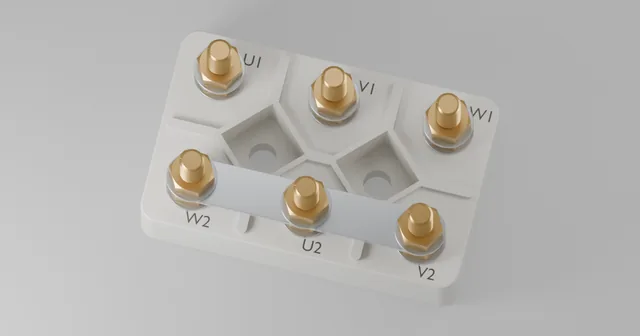
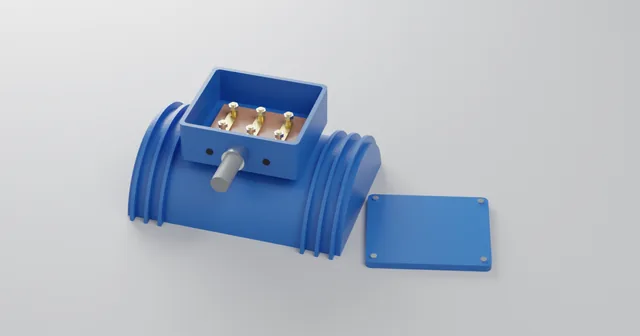
Opening the terminal box to check or change leads is de-energized work: de-energize, lock out and verify absence of voltage before covers come off, and re-energize only with covers back on. NFPA 70E, 2024 edition, covers safe electrical work practices around equipment like this, and your authority having jurisdiction and the motor documentation carry the requirements that govern on site. With the leads confirmed against the nameplate chart — a deliberate matching choice on larger machines, as Wye or delta winding for a 200 hp 480 V motor shows — bring the shaft to its real load and clamp all three line conductors.
All three readings should agree. If they disagree right after an open transition, why a wye-delta motor draws unequal amps after transition is the diagnosis path, and once the currents settle, calculating star-delta motor power from measured currents turns them into an input power figure you can sanity-check against the shaft load.
Decision: run the connection the nameplate chart pairs with your measured supply voltage; treat any wye reading as a starting-only number that belongs to that connection alone; and after a transfer, judge the motor and set its thermal protection from line currents measured in the running connection at real load.
Questions asked
If a delta line current really measures 120 A, what flows in each winding?
In a balanced delta connection only, winding current is line current divided by 1.732, so 120 A at the line means 120 ÷ 1.732 = 69.3 A in each winding. That conversion describes one measured operating point; it does not predict what the motor will draw after the connection changes, because the winding voltage and flux change with it.
Does a wye start cut torque as much as it cuts current?
Yes. Torque follows winding voltage squared, and the wye connection gives each winding 1/1.732 of the delta winding voltage, so available starting torque falls to (1/1.732)², about one third of the delta value. That is why wye-delta starting only suits shaft loads that can accelerate on a third of the delta starting torque; a load that stalls the motor in wye holds it at locked-rotor current.
Which connection does the nameplate full-load current apply to?
To the connection and voltage the nameplate chart pairs them with — for the worked motor, delta on the line supply. If the leads are set for the other connection, the nameplate number describes neither the winding voltage nor the current you will measure, so read the lead table on the nameplate before setting protection or judging the amps.
Why do the three line currents read unequal right after an open transition?
In an open-transition wye-delta starter the motor is briefly disconnected and reconnected while still spinning, so the phase relationship between the residual rotor flux and the incoming supply can be unfavorable and the first delta half-cycles pull unequal current. It normally fades as the motor settles; an imbalance that persists at running speed needs its own diagnosis.